The life of Dr John Hargrave
John's First Nation's Ancestry
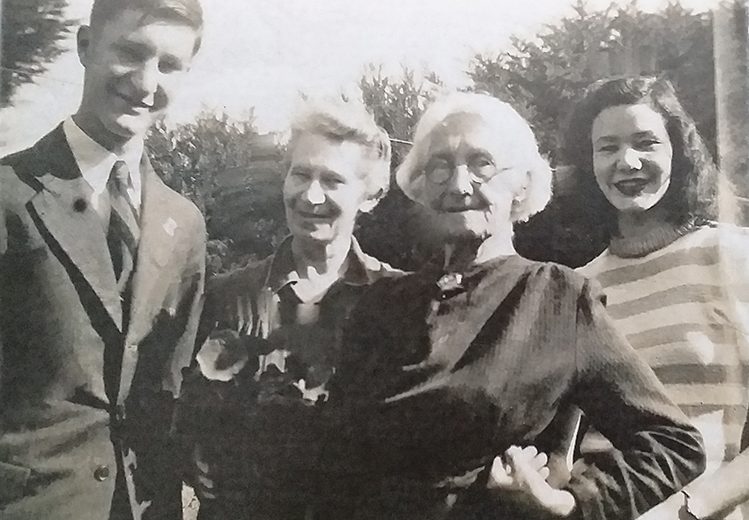
John Hargrave was born in Perth in 1931. His mother, Madeline, was one of the first female graduates from the University of Western Australia, and his father, Norman, was a partner in a successful printing company. When John was just seven years old, his father died from lead poisoning and his mother, with help from their families, raised John and his sister Barbara.
John was aware from a young age that his sister was teased because she had ‘Aboriginal features’. He later reflected on this and explained to friends that Barbara had often been called ‘Boong’ during her early school years, which is an offensive derogatory term for ‘Aboriginal’.
Barbara, herself, identified as a First Nations woman as she grew older. She graduated from the University of Western Australia with a Bachelor of Science (Physics) and studied to be an optometrist at the Sydney Technical College. Later she earned her B.Sc (Hons) Psychology at the University of London. Barbara’s career included significant research and published articles.
“The hero draws inspiration from the virtue of his ancestors" – Johann Wolfgang von Goeth
There’s no definitive documentation that supports John’s childhood feelings about his ancestry. However, it is recorded by John that his sister and an aunt both had Aboriginal features and dark skin.
Later, as a graduate doctor, John shared his feelings with anthropologist and mentor Olive Pink. There are many references to ‘Aborigines’ in their 20 years of letter writing. In fact, Olive often addressed John by his Aboriginal name (Gojok) in her letters, and as ‘Blackfellow Doctor’ when referring to his work. They both cared deeply for the wellbeing of First Nations peoples and despite Olive’s occasional quips about being his grandmother, they shared a rare and important friendship .
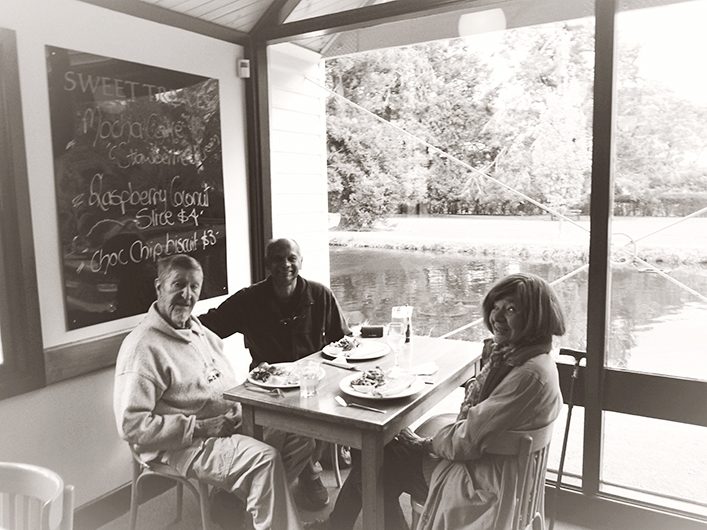
John practised medicine for 40 years in the Northern Territory and during that time, some of his close colleagues and friends were aware that he identified as a First Nations man. In his spare time, John conducted research on his ancestry and after he retired in 1996, he moved to Tasmania and dived deep into the state’s First Nations history. It was Tasmania that held his ancestors’ secrets, and where his mother was born.
The closest John came to identifying one of his ancestors as a First Nations person was his mother’s grandfather. “It is not impossible that he had Aboriginal origins”, he wrote of William Mathews’ interweaved birth records. Some years later, an experienced caretaker of the Hargrave family tree wrote “It has been suggested he [William Mathews] had Aboriginal paternity.”
In John Hargrave's own words
“It is apparent there were many convicts among the [our] families, some of whom arrived on the First and Second fleets and others who came later. It is not clear as to whether there were amongst the descendants people who were of Aboriginal descent as well.
There are descendants shared by the common origins of Elizabeth Pillinger (M019) on one hand and Charlotte Loveridge (M030) on the other, who had or have what can only be described as ‘Aboriginal’ features. One of them is my sister and another a great aunt who had extremely ‘dark’ features.
My own Mitochondrial DNA leads me back to a female of Caucasian origins who arrived on the First Fleet and my Y-Chromosome is also Caucasian since my father came from England in comparatively recent times. This research therefore fails to uncover where and when this ‘Aboriginality’ may have occurred – probably circa 1828 or 1831. Genetic markers may provide some clues in the years to come.”
Source: Hargrave, John. Some Early Norfolk Island and Van Diemen’s Land Families 2009, p.3