The life of Dr John Hargrave
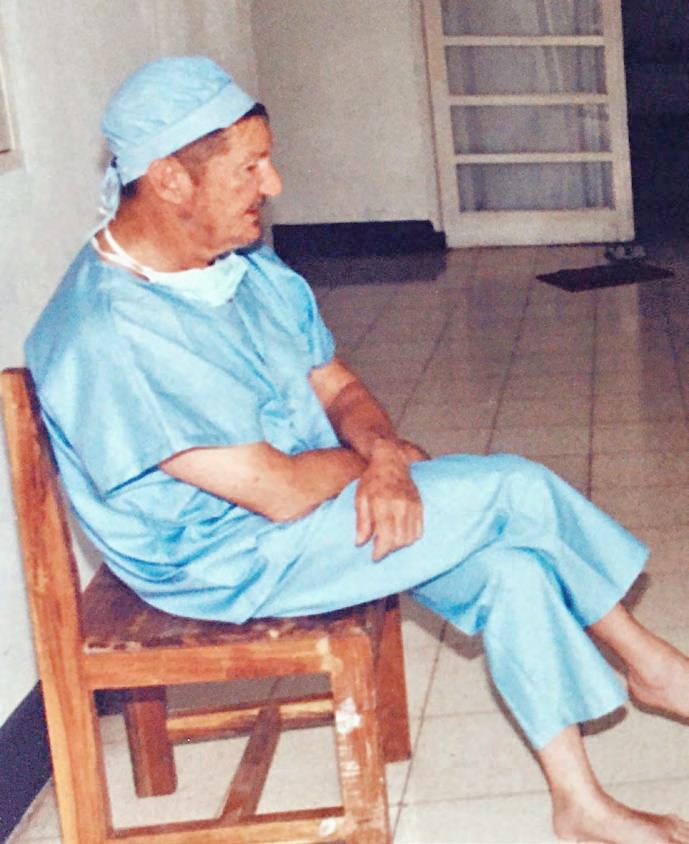
"When I first went to East Timor with John Hargrave it was clear how valued he was by the people, not only for his surgical skills, but for the consistency of his visits and his care."
–– Dr Mark Moore.
Founder of the Overseas Specialist Surgical Association
of Australia (OSSAA)
In the early 1990s, Dr Hargrave heard from his colleague Ellen Kettle that there was a group of seriously disabled and deformed children and adults living in a place called Soe in the hills of Kupang in Timor. Ellen, an experienced nurse, had met a woman there named Joy Whaley who was single-handedly caring for the children.
John agreed to join Ellen on her next trip to Timor and after he saw the children, along with leprosy in “mostly old disabled people,” he agreed with Ellen that they needed to set up a program. It wasn’t as easy as they hoped, but they overcame the language barrier in time for a chance meeting in the hills with the Bupati (head of the region). After a lengthy discussion, the three agreed the best program would be a sister-hospital relationship between Soe and Darwin, with a focus on the “correction of disability.”
The early days were tough in the operating theatre in the hills. Surgeons had to bring their own instruments and scrubbing up consisted of an assistant pouring a bucket of water over outstretched hands. The staff toilet was usually flooded with water, diathermy was almost non-existent and lamps didn’t operate at capacity. Still, they worked hard and people who’d been living with deformities for years were repaired and renewed.
Over time, John and Ellen visited locations in West Timor including Kefamanau and Atambua. A visit to a hospital in Flores was a double-wedged experience with an outstanding rehabilitation project but “quite a lot of leprosy deformation” along with “every other imaginable deformity and disability that there was,” John said. The operating theatre was in good order and John and Ellen were pleased to begin repairing some of the deformity within the community.
Young Indonesian medical graduates brought sought-after anaesthesia and stayed around to learn more skills. Dr Joyce Manek, a skilled and motivated doctor from Atambua, began visiting regularly and orthopaedic surgeon Dr Stephen Baddeley came across from Darwin providing, as John said, “enormous new skills to the program”.
The program hit rocky ground around 1975, due to the occupation of East Timor by Indonesia. It was difficult working in places like Aileu, where there was a large amount of deformity and disability, but hard to build trust as foreign medical staff. John partially solved the problem by hiring an Italian-born Indonesian resident to administrate the program, but as Independence grew closer, the mood became edgier. At one point a political supervisor followed the doctors and nurses around as they worked and then reported on their activity.
Professor John Hunn joined the program from Tasmania and “was a tower of strength in every way,” John reported. They repaired deformities at Dili and Baucau, and at Cancar after Independence had died down. John continued his work in East Timor until 2000, when he had to attend to his own health and undergo coronary bypass surgery. Ellen Kettle died in Darwin in 1999.
Craniofacial surgeon Dr Mark Moore took over the OSSAA with John’s blessing and is still running it today.
For more information about the OSSAA
Visit the OSSAA website.
Check out the OSSAA Facebook page.
Read about the work of the OSSAA in The Adelaide Advertiser.